San Mamés (“La Catedral”): From Tradition to Modernity
Origins and the Old San Mamés (1913–2013)
- The first San Mamés stadium opened on 21 August 1913, hosting a match between Athletic Club and Racing Club de Irún as part of a triangular tournament (also featuring England’s Shepherd’s Bush F.C.).
- The first goal in its history was scored by Rafael Moreno “Pichichi”, a legendary name in Spanish football.
- Initially, the ground held approximately 7,000 spectators, of whom around 3,000 were seated.
- Its name derives from a neighboring asylum and chapel dedicated to Saint Mammes, a Christian martyr said to have tamed lions—hence the nickname “Los Leones de San Mamés” (“The Lions of San Mamés”).
- After a match against Athletic in 1929, a newspaper headline “Volvió a rugir el león de San Mamés” cemented the association of the club with lions.
Renovations and Growth
- Over time, the stadium was expanded and modernized:
- In 1952–1953, the main west stand was built, featuring a distinctive arch that became an architectural hallmark.
- Additional stands followed: Capuchinos (south) in 1956; North/Misericordia (Garay) in 1962; East in 1972.
- Ahead of the 1982 FIFA World Cup, San Mamés underwent further upgrades, including improved access and seating. It hosted group-stage matches, reaching an attendance of over 46,000 at that time.
- Later, to meet safety standards (e.g. removal of standing areas and barriers), capacity was reduced to about 39,750 seats.
The Stadium Known as “La Catedral”
- Loved by fans, the old San Mamés was affectionately called “La Catedral” of football—an emblem of tradition, community, and devotion to Athletic Club.
- It was the oldest grounds used continuously for La Liga matches until its final season 2012–13.
- Its final official match—a La Liga fixture—was played in June 2013, followed by a farewell event celebrating its centenary and legacy. The last goal in league play was by Alain Arroyo, playing for Levante.
The New San Mamés (San Mamés Barria) – 2013 to Present
Planning and Construction
- Plans for a new stadium date back to 2004, with formal approval in 2006 to build adjacent to the old site on land previously occupied by the Bilbao International Trade Fair. (Wikipedia)
- Construction began in 2010 and was executed in two phases, allowing the club to continue playing at the old ground until most of the new stadium was ready.
Inauguration and Features
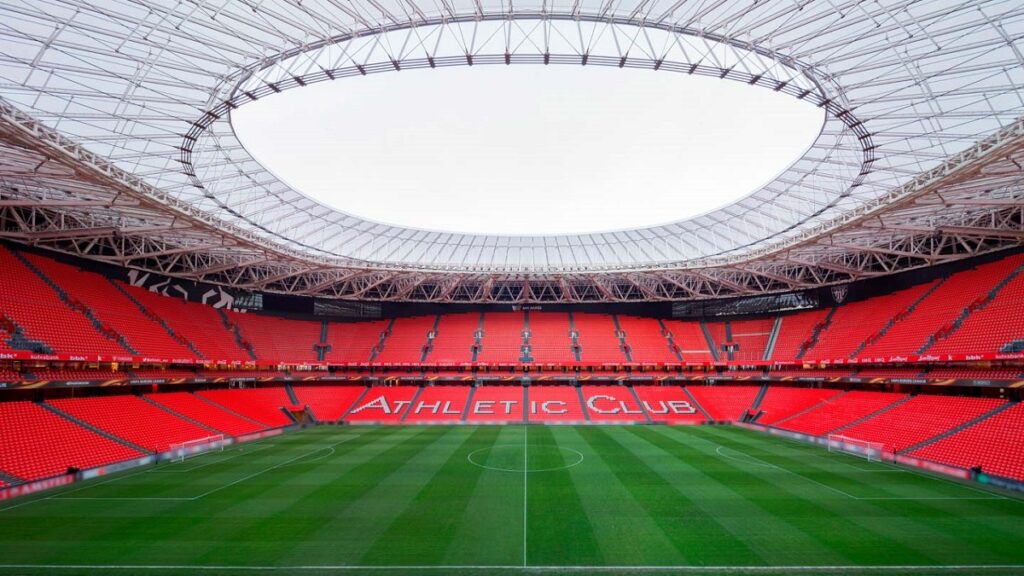
- San Mamés Barria was inaugurated on 16 September 2013, with Athletic Club defeating Celta Vigo 3–2 in the opening match.
- The inauguration included a ceremony where a piece of turf from the old cathedral stadium was placed in the new pitch—symbolizing continuity and tradition.
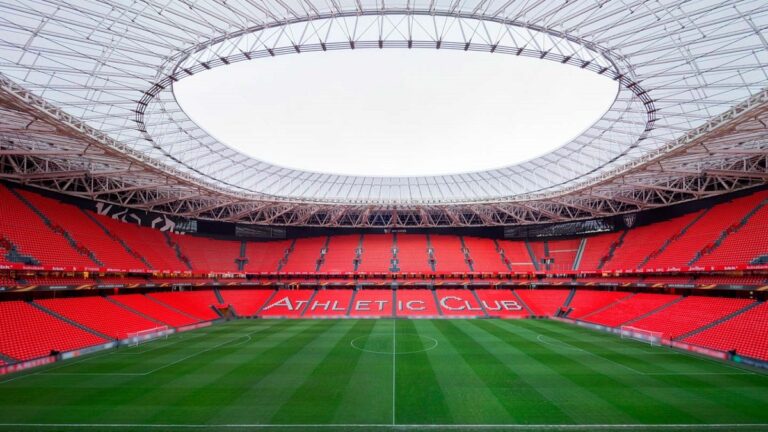
- The new capacity is approximately 53,331, making it the seventh-largest stadium in Spain and the largest in the Basque Country.
Design, Usage, and Awards
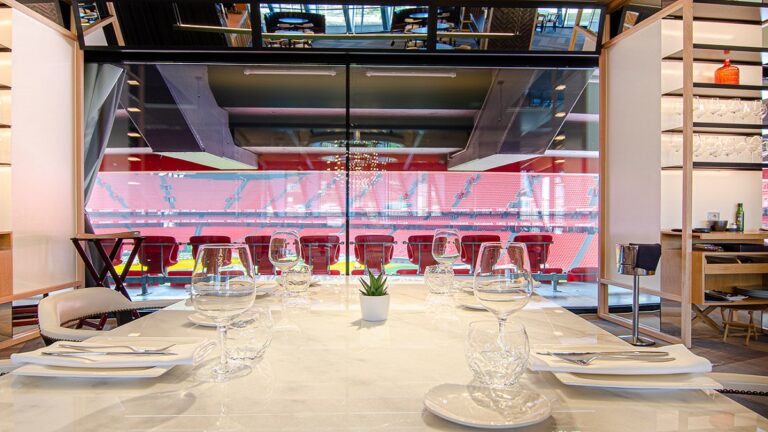
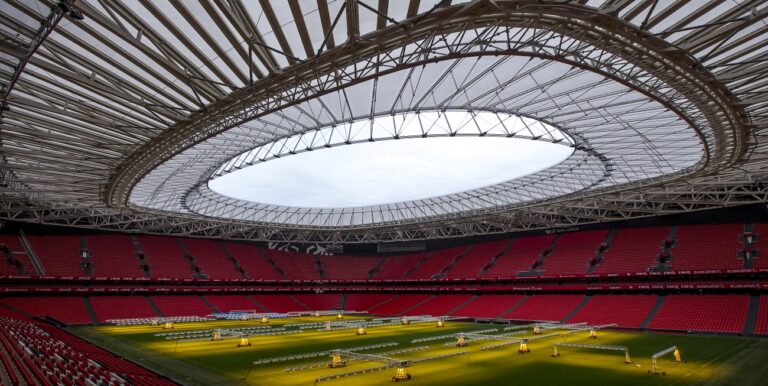
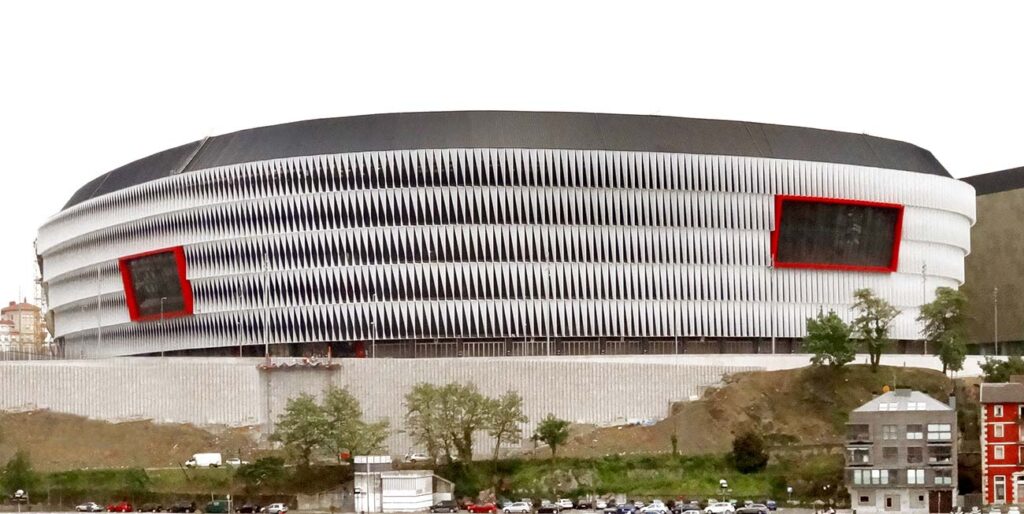
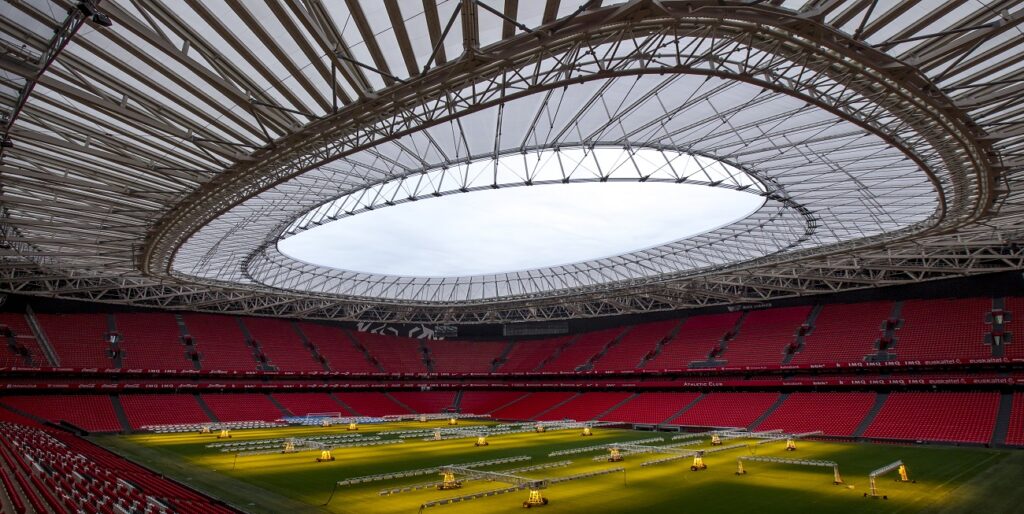
- Designed by the architecture firm IDOM (with lead architect César Azcárate), the stadium boasts a modern layered bowl structure, steep stands, and excellent sightlines.
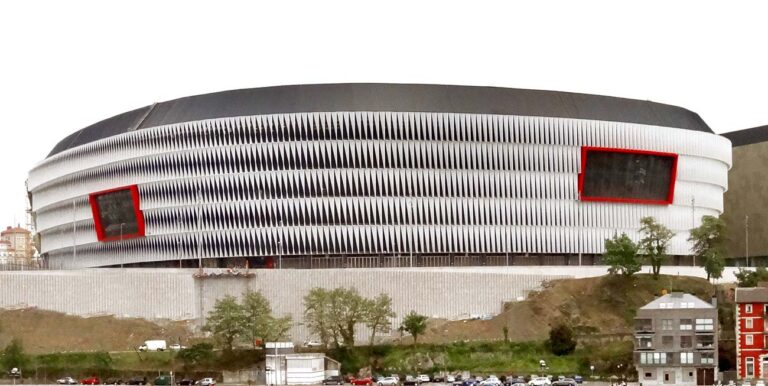
- The external façade features ETFE modular panels (some illuminated), giving the building a contemporary aesthetic while respecting the urban surroundings.
- Equipped to UEFA Category 4, it meets the highest standards for international football, able to host major matches including potential finals.
- San Mamés has won several design and architecture awards, including:
- World Architecture Festival 2015 – Best New Sports Venue
- Venue of the Year 2017 at the World Football Summit
Multifunctional Complex
- Beyond football, the stadium includes:
- A municipal sports centre with swimming pool, sauna, spa.
- An indoor athletics track (112 m long) for training.
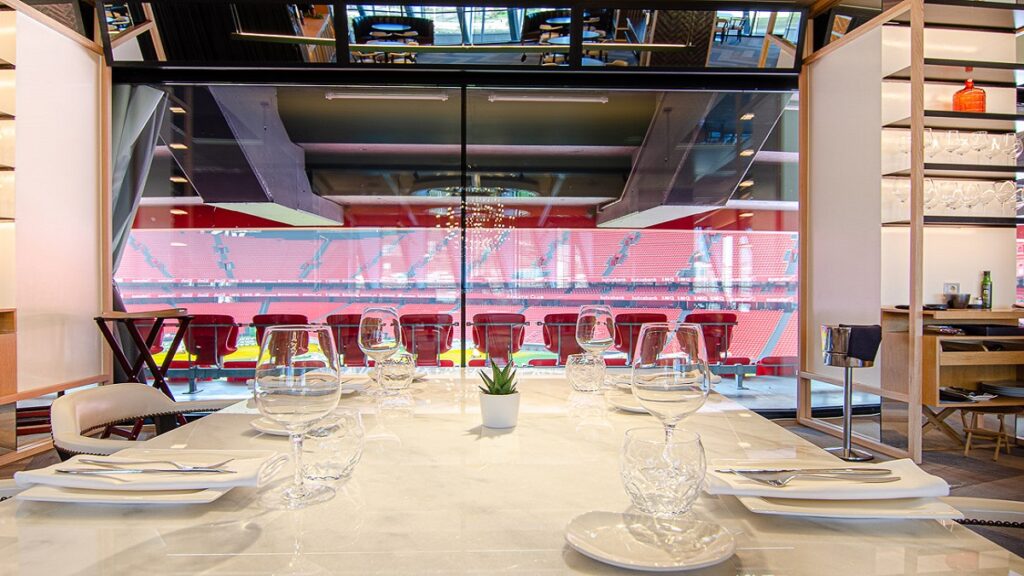
- Additional spaces for conferences, innovation, and community use.
Cultural Impact and Legacy
- Connection to Tradition: Even as it modernizes, San Mamés retains the identity of Athletic Club: the old turf, the name, the lions, the Cathedral motif remain central.
- Modern Landmark: Located by the Nervión River, it has become symbolic not just of Athletic, but of Bilbao’s architectural and urban renewal.
- Events Beyond Football: The venue hosts concerts, rugby finals, Vuelta a España starts, and more—from Guns N’ Roses shows to European rugby events.
Timeline Summary
| Period | Key Events & Evolution |
|---|---|
| 1912–1913 | Construction and inauguration of the old San Mamés; first match on 21 August 1913. |
| 1952–1972 | Successive tribune expansions; iconic arch built in 1953. |
| 1982 | Renovated for World Cup; hosted group-stage fixtures. |
| 1997 | Conversion to all-seater; standing areas removed. |
| 2010–2013 | Construction of new stadium in phases adjacent to old site. |
| 2013 | Opening of San Mamés Barria on 16 September. |
| 2015–2017 | Architecture awards; UEFA recognition. |
| Present | A 53,000+ seat, multifunctional, modern stadium—preserving the Cathedral’s legacy. |
Final Thoughts
San Mamés stands as one of European football’s most meaningful grounds—not just for its architectural qualities, but for how it binds past and present. “La Catedral” remains sacred to Athletic Club fans, even as its new home projects ambition, efficiency, and modern spirit. The roar inside its stands today may be in a different setting, but the passion, identity, and reverence remain unchanged.
Let me know if you’d like stories from memorable matches, architectural details, or fan culture around San Mamés!
Loading...
No Records Found
Sorry, no records were found. Please adjust your search criteria and try again.
Maps failed to load
Sorry, unable to load the Maps API.